
Embodied AI for Sensitive Entrepreneurs — Ethical, Values-Based Tools That Honor Your Pace
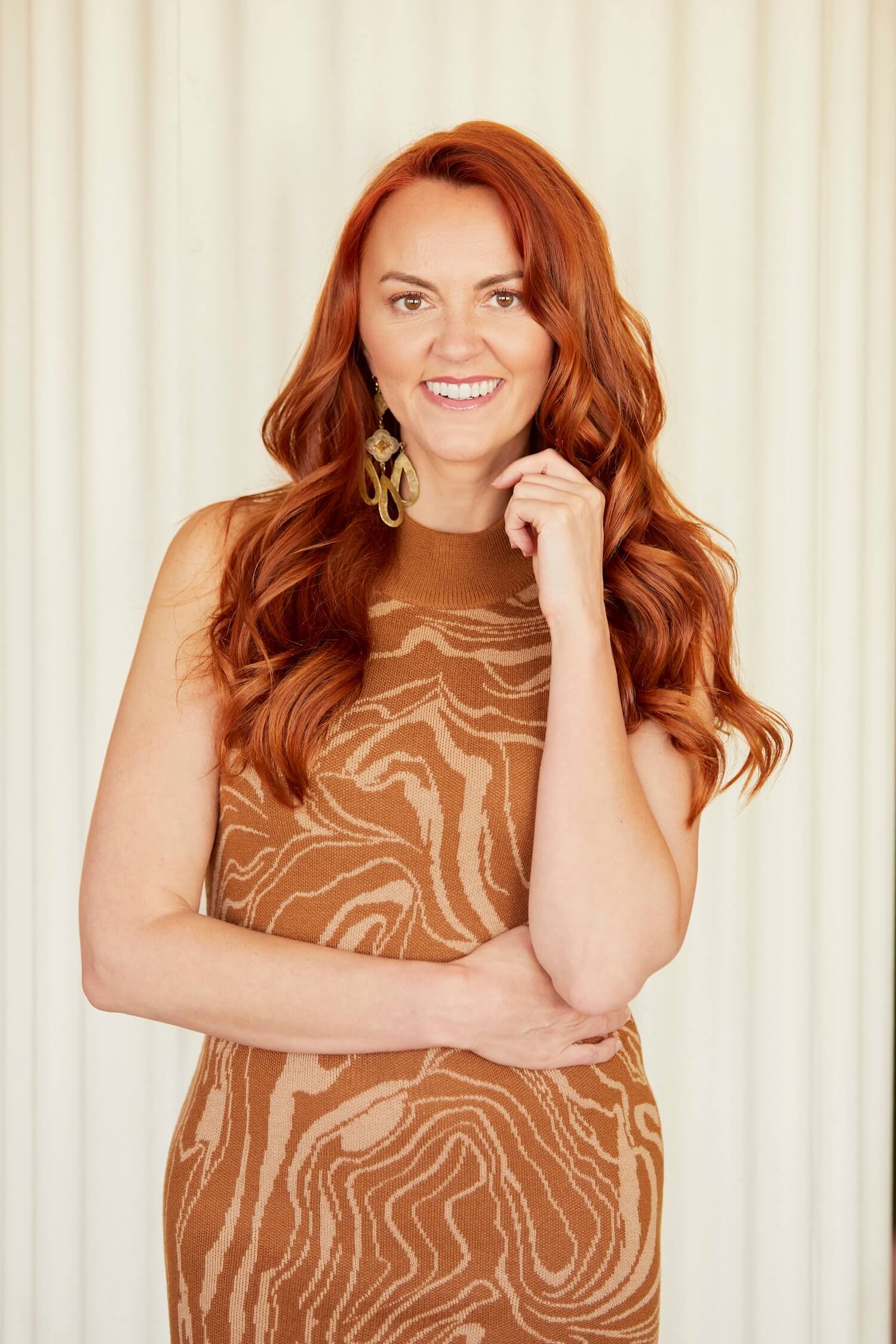
Natalie MacNeil, founder of AI Dream Team
Episode 41 of the Sensitive. Podcast: Ethical + Embodied AI: How Technology Can Bring Us Closer to Our Humanity with Natalie MacNeil
Listen Now 🎧
Watch the full episode on YouTube here:
Table of Contents
Why Embodied AI Belongs in Sensitive, Values-Based Business
This conversation with futurist and embodiment practitioner Natalie MacNeil reframes what technology can be.
Embodied AI invites us to bring somatic awareness and ethics into collaboration with machines.
It helps HSP and neurodivergent founders create from clarity, protect originality, and widen capacity without overriding pace or voice. For values-led businesses, that shift is everything.
What “Embodied AI” Means in Practice
Natalie’s frame is simple and powerful.
Begin in your body. Set an intention. Collaborate with AI from that grounded place.
Your somatic signal becomes quality control—it tells you when output feels off, thin, or not truly yours.
In a world where misinformation and deepfakes circulate by the hour, embodiment and discernment are no longer “nice-to-haves.”
They are core leadership skills. Ethical AI starts here: in presence, in practice, and in your own body’s quiet authority.
Where AI Is Taking Us: More Time, More Presence, A Return to Humanity
This was the heart of the conversation. Natalie holds a hopeful, informed view of what’s coming.
As AI takes on more of what we’ve long valued—processing, producing, thinking—we’re invited back into the terrain only humans can inhabit: heart, body, relationship, creativity, meaning.
She reminds us that, across generations, the structure of work has slowly softened.
Hours have shortened in many places, flexibility has grown, and entire cultures are re-examining what productivity even means. AI accelerates that evolution.
The deliverable matters more than the hours. The outcome more than the grind.
That doesn’t mean the transition will be easy.
She calls this a multi-year initiation—chaotic, uncertain, and alive. But within the disorder lives a powerful possibility: technology returning us to our humanity.
As thinking becomes automated, feeling and being regain their rightful value. The future of work may just give us back the very thing we’ve been too busy to notice—time.
AI for Neurodivergent Founders — Support That Fits Your Real Brain
For many neurodivergent entrepreneurs, traditional systems have always felt like a round hole. AI for neurodivergent business owners can relieve friction when you let it adapt to your actual wiring.
Capacity-aware prompting
Tell the assistant how to meet you today:
“Capacity is low—keep responses brief, one next step at a time.”
“I’m in creative flow—capture ideas and queue them for later.”
“High sensory load—start with summary, then optional detail.”
Role-based helpers
Create small, clear assistants that mirror your real workflow:
A Focus Partner that breaks work into humane steps.
A Scope-Keeper that protects boundaries.
A Voice Guardian that keeps your tone intact.
A Research Tracker that catches resources without breaking flow.
System prompts as self-advocacy
Let the tool interview you about sensory thresholds, pacing, and executive-function supports. Save those notes as its standing instruction so your accommodations travel with you.
The through-line is dignity. You don’t need to mask—you get to build systems that fit.
Protecting Originality Without Losing Ease
Natalie’s ethic: the seed always starts inside you.
AI can refine, structure, and extend—but the pulse of originality still lives in your body.
A gentle values based AI rhythm:
Before you prompt
Ground. Name your intention. Paste a short frame such as:
“Use my source materials first. Prioritize clarity. No invented facts. Offer placeholders for citations.”
During
Ask for possibilities, not prescriptions. Expand only where there’s resonance. If your voice thins, write a paragraph in your own words, then let AI tidy lightly.
After
Read aloud. Feel for congruence. Add the lived context only you can provide. Attribute anything that isn’t yours.
That’s what keeps ethical AI human.
Education, Families, and the Wider Culture
When we turned toward the collective future, Natalie’s vision widened the frame.
She described a world where AI expands our humanity rather than replaces it.
Picture each child with a personal AI mentor—one that understands their sensory needs and learning rhythms, freeing teachers to focus on connection.
Picture work models evolving alongside, with experiments like universal basic income ensuring that survival isn’t the sole driver of worth.
These are not distant dreams; they’re already being piloted in Scandinavia, Canada, and parts of the U.S.
Beneath the headlines, though, lies a deeper recalibration.
As the machines handle the thinking, we’re called back to our other intelligences—the body’s wisdom, the language of cycles, the coherence of community.
It’s a paradox both humbling and holy: the robots might be what finally remind us how to be human.
Embodied AI becomes the bridge—not to more speed, but to a slower, truer presence.
When Not to Outsource
Even as someone who’s built her career at the edge of innovation, Natalie keeps one sacred boundary: the spark must still come from within.
AI can support execution, but vision originates through lived experience, intuition, and body-based knowing.
Before beginning any project, she asks herself, What is mine to bring forward right now? From that clarity, discernment feels simple.
It’s tempting to hand everything over to the algorithm—to let it chart strategy and decide direction.
But a one-degree drift in your inner compass can land you in a very different destination. AI can map the route, but only you can feel which path is true.
Embodied AI isn’t about surrendering agency.
It’s about remembering that your deepest intelligence still lives in the pulse, the pause, the knowing that can’t be coded.
Holding Hope and Choosing Our Timeline
As we closed, Natalie named something I can’t stop thinking about: the future is not fixed.
The stories we tell—and the states we embody—shape what becomes possible.
If we meet this moment with fear, we amplify fear.
If we meet it with grounded hope, that hope becomes a self-fulfilling prophecy.
She invites us to hold the vision of a humane, heart-led world, to embody the hope of what’s still possible, and to build systems that protect the tenderness of being human.
Learn More from Natalie MacNeil
If you’re ready to explore how to create your own ethical and embodied AI systems, Natalie teaches an in-depth program called AI Dream Team—a powerful training in building custom GPTs and workflows rooted in your body of work, your ethics, and your voice.
You’ll learn how to collaborate with technology instead of compete with it, and how to keep your creativity, intuition, and humanity at the center of your business.
Episode Resources
Find and follow Natalie MacNeil on Instagram
If This Episode Resonated: What's Next
If you're realizing that building a sustainable business requires systems that fit your actual wiring—not overriding your body to fit someone else's template—here's how I can support you:
Threshold Mapping Day ($150) — Feeling the tension between what your business demands and what your nervous system can sustain? This focused asynchronous day on Voxer helps you map what's no longer working, what your body is telling you, and what structure would actually fit your capacity. 100% applied toward Crossing the Threshold if you book within 7 days.
Crossing the Threshold ($500/month) — Private somatic coaching for HSP and neurodivergent entrepreneurs navigating business identity shifts. 2 sessions per month, asynchronous support on Signal, personalized practices. 3-month minimum. This is where you learn to build a business around your body's wisdom—not force your body to comply with business demands.
Join my newsletter — Bi-monthly letters on building businesses grounded in embodied knowing, identity thresholds, and the journey from self-abandonment to sovereignty. For sensitive entrepreneurs who refuse to override their systems for productivity.
Further Resources
Kim Kimball
Somatic Coach for women in life + identity transitions
